Care Is Not A Single Act: Re-creating Resiliency During A Climate Crisis
March 2026 newsletter
Kia-Beth Bennett
4/16/20268 min read
I recently asked my friend and fellow grower, McKay, for their thoughts on a difficult question I’d been sitting with: was this land ever meant to be farmed?
This farm I love is situated in the Y of Fish Creek, a state-protected wetland home to black-crowned night herons, jewelweed, muskrats, crawdads, joe pye weed, beavers, cerulean warblers, and more. A significant portion of the farm’s ‘forest’ is actually federally-protected ephemeral wetland, and seasonal flooding is essential. In an average year, there’s a healthy balance of moisture, and animals and plants can thrive.
As the climate crisis thunders on, however, those seasonal floods increase, easily creating sodden row crops and parasite-laden puddles. Most of the farm is low enough that there are pastures I avoid until June, because a small flock of sheep can compact wet ground in just a few days and impact the entire year’s soil health. It makes me wonder whether there should even be any livestock here.
McKay has visited often enough to be familiar with the general slope of the fields, placement of gardens and hedgerow patterns here. And what we discussed was that it’s not that this area isn’t to be farmed, it’s that farming often shouldn’t look like the picture books and TV ads we’re exposed to - weed-free vegetable gardens, blemish-free fruits, Holstein cattle whose calves are taken from them within a day, so that humans can collect all the milk. There are hundreds of ways to form reciprocal relationships that result in food collection or growth, and a lot of practices are inappropriate for a lot of landscapes, especially those that are rapidly changing as the planet is lit (literally and metaphorically) on fire (this is not an argument against prescribed burns). My grazing fields, for instance, are turning into makeshift wetlands as sedges and rushes replace grasses and wildflowers. Swamp-loving red-wing blackbirds are surviving better than pasture-loving bobolinks. And on the flip side, temperatures are swinging from 40°F to 90°F, and I’m left watching our clay soil crack, the dry, gaping, canyon-like slits a foot deep. Sixty years ago, I’m told, we could not reliably grow peppers in the Oswegatchie watershed. The growing season was so short that even under cover, plants would die of frostbite before producing mature fruit. Now, Aji Confusion and Albino Bullnose seeds sprout in the warm Solarium, even as I’m in the garden sacrificing chocolate and eggs, anything to appease whomever decides where the rains go this dry Spring.
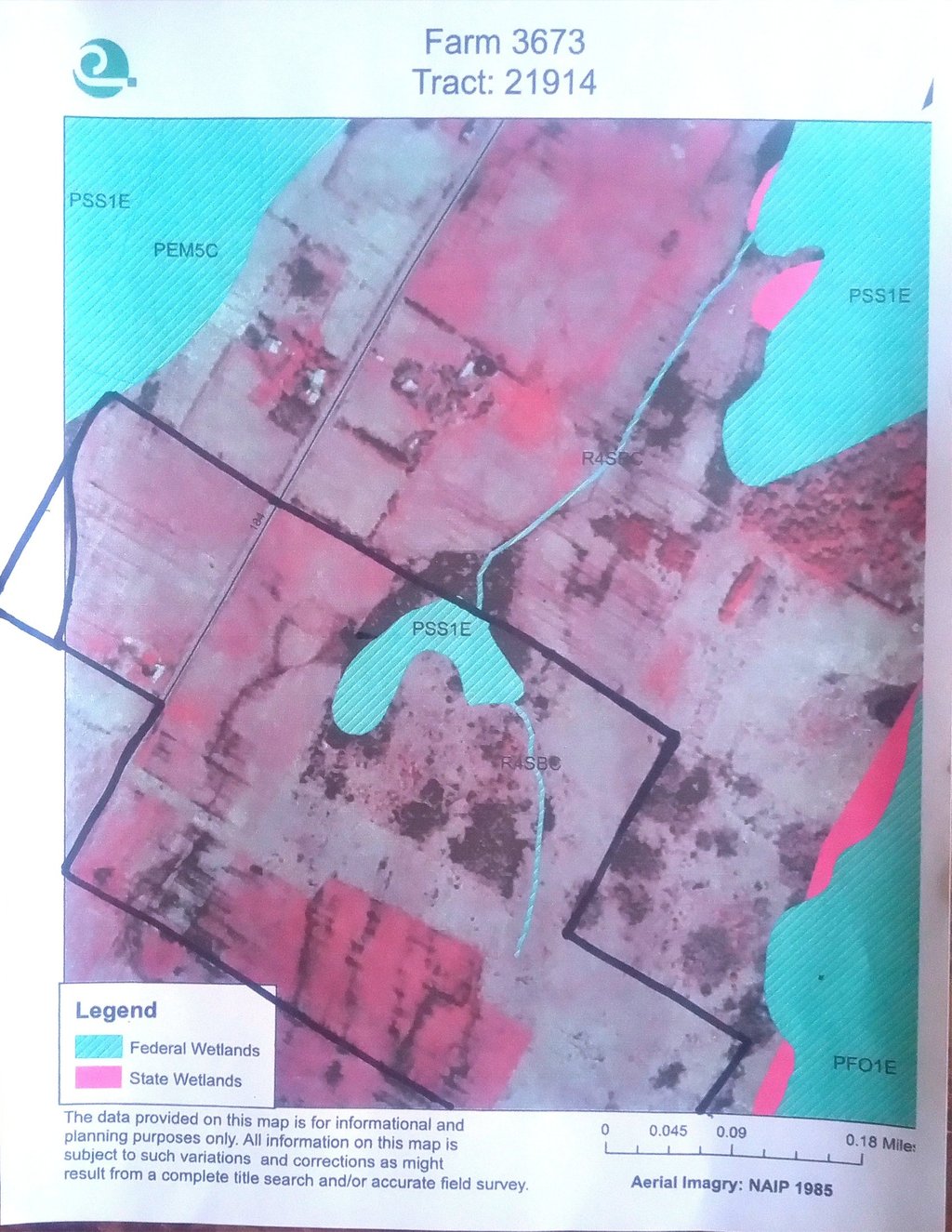
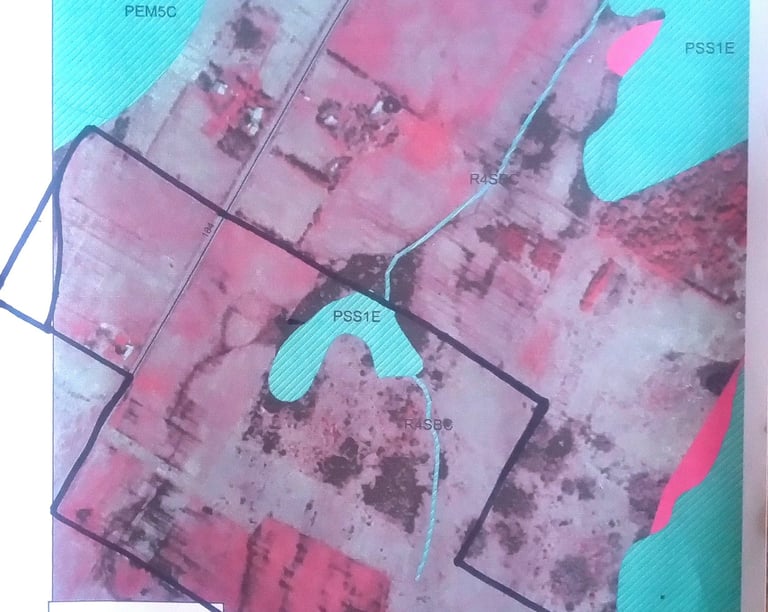
An overhead soils map of the farm, displaying federal (blue) and state (pink) wetlands. The thick black line displays the main farm boundaries. The jagged, dark lines that crisscross the fields are seasonal streams.
I wrote the last newsletter about the dynamics of releasing our position as a public-facing market farm, describing how a personal need to heal and develop is inherently at odds with capitalism and the societal expectations thereof. The healing of an ecosystem is no different.
Agroecology (what I practice) centers relationships between humans and non-humans, requiring we learn how to rejuvenate one another as we seek to nourish. Growing potatoes is not a bottom-line venture where I use my diesel tractor to plow and plant an acre of commercially-popular spuds. It’s instead an unplowed quarter-acre experiment with Galadryal the ox, a hundred-year-old planter named Penny, six varieties of rare or endemic potatoes, and the killdeer nest we flag and monitor. In corporate capitalism, this environmentally-friendly, small-scale, attention-to-detail technique is deliberately devalued. Agricultural industry - despite public trends in the opposite direction - still demands farmers “get big or get out”, still pushes the narrative that bulldozing hedgerows and destroying habitat is worth it, (falsely) claiming that’s how “America feeds the world.” The market is intentionally neither climate-resilient nor climate-aware. How easily could I, someone in a USDA Zone 4, walk into Price Chopper today and pick up a clamshell of blueberries, despite the frost in my own gardens? I could grab oranges or lemons, despite the Northern latitude. If immediate consumer demands are met, society will ignore the long-term costs and choose to be convinced that everything is alright.
There is, of course, nuance. Many, many farms are market-facing and still regenerative, or striving to be. I am in no way looking to discredit or disregard their efforts; rather, I’m exploring what this unique farm, with our unique experiences and specific microclimates can do to create and maintain environmental resiliency, to understand what a future on harmed but beloved land means. Because splitting myself in two by attempting to prioritize both hummingbirds and a mortgage payment is exhausting, demoralizing, and damaging.
My takeaway is that as a farm committed to climate awareness, endangered species, and ecological restoration, we will not be serving immediate market demands. We’re pushing ourselves to build humus, not capital, to balance crab spider populations, not check books. It can absolutely put us in a financially precarious position, so we continue to lean more and more heavily on neighboring and neighborly connections. I’m able to exchange beef - from a bull whose grazing patterns helped increase yellow warbler habitats - for firewood that my next-door neighbor harvests each year, cutting down on the expense and destruction of a fossil-fuel reliance. I gift friends transplants, and years down the line, when they start they own soap business, I’m fortunate to receive some of the first bars. I begin removing Tatarian honeysuckle from a hedgerow, only to discover tiny golden raspberry canes who can now flourish and fruit in the sunlight. I offer eggs to the ravens, and they sit on the barn fence, alerting me to problematic events. A focus on long-term stability and adaptability creates a mental and physical landscape spiderwebbed with strong relationships, micro-ecosystems, and multi-generational projects.
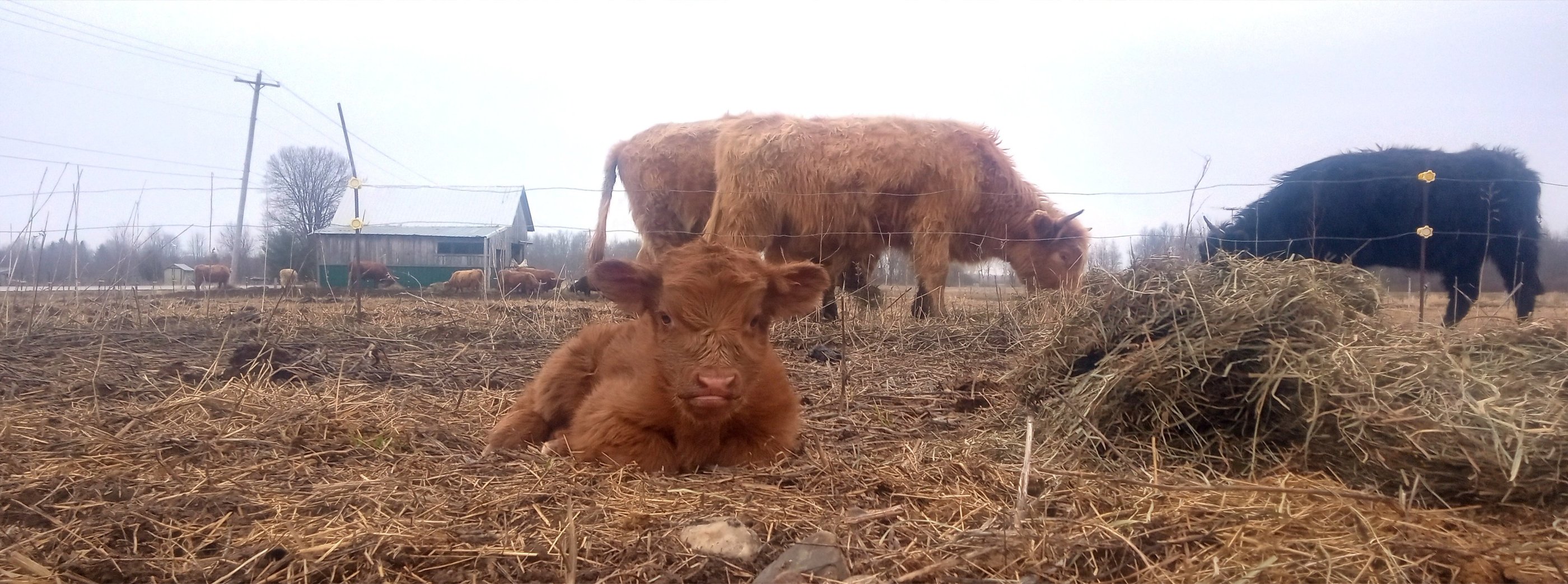
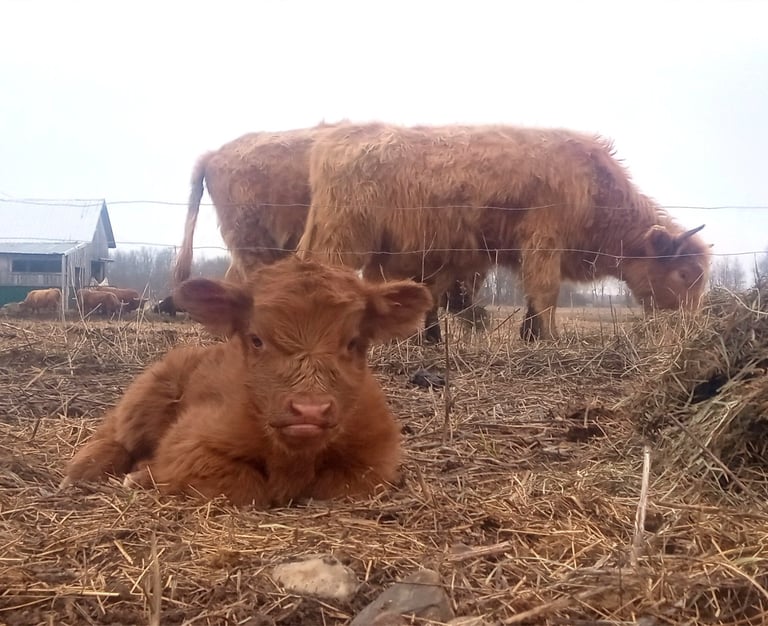
Baby Marigold, born to Clover on April second in the to-be potato patch. She’s bouncing around the field these days with Cousin Estrella.
Okay, so flowery prose aside, how exactly are we creating climate resiliency on 113.5 acres in 2026? Because an ecological mindset is nothing new here (and not actually new to the world, either, but that’s another story), so what makes this year different?
Quite plainly, we’re locking in. Or buckling down. Or hyper-focusing. Or whatever it’s called these days; the point is, if you choose to say hi to me in the local library, you should decide beforehand whether or not you’re interested the shifting bloom times of trout lilies, because I will tell you about them.
It starts with the long, long view. I’m watching the fields with 10, 20, 50 and 100-year perspectives, researching techniques that’ve stood the test of time, weather and colonialism, and learning how to incorporate them into my daily life. This year, fluctuating moisture levels are my primary concern. Farms around us are industrializing, so they’re drawing more water from shared underground reserves, and historical rain patterns are disappearing. I’m terrified of drought, and my animals are just as bothered by floods.
To balance our wet and dry needs, we’re deepening, widening and reinforcing the streams that run through the grazing pastures. This will ensure habitat stability for amphibians, reptiles, birds and invertebrates, and the water will slowly seep into the soil, locking in moisture for plants. Each stream that we add curves, boulders and pockets to will also flow more, rather than sit as a mosquito pool, providing potential backup water sources to the ruminants.
I’ve set the goal of installing at least one rainwater collection system under each peaked roof. Strategic positioning means I can easily utilize the collected water throughout the day, rather than drawing from those rapidly-depleting groundwaters.
Last year I was unable to prioritize mulching, which increases soil organic matter and nutrition, reduces erosion and waterlogging, increases long-term water retention and carbon sequestration, and significantly reduces weeding. This year, I’m doubling mulching and composting, drawing on years’ worth of barn cleanout to boost my efforts.
Even as more humans reside here, we’re reducing household water use and water waste. Both houses now have composting toilets, and this Summer we’ll be installing a greywater system in the farm kitchen.
We’re shrinking the sheep paddocks. Flooded fields negatively impact the sheep more, as they easily pick up parasites and their hooves can struggle with constant moisture. We’ll be better able to keep them off wet ground, and over the next couple years, we can enhance the stream that runs east to west through their pastures, reducing squishy ground without reducing water retention.
Those are this year’s priorities! Not because more doesn’t need to be done, but because it’s important to me that I do a quality job on each project, preventing myself from having to fix or finish things in six months. That sort of short-term carelessness got the world where it is.
I do think it’s still easy for folks to overlook the climate crisis - Americans live day to day. We struggle to access healthcare, food, a decent night’s sleep. Many, many people still don’t believe that the entirety of our landbase is collapsing, that the lives we hold dear will wash away in the next unseasonal storm. And in the midst of fascist insanity, of strait-blocking wars and manufactured famine, how can we do anything but respond to the immediate stressors? Does it not make sense to just grow more tomatoes? More onions? Why would I take a field out of “food production” when I could, hypothetically, grow that food for more humans? But if we take the short vision here, there will be no tomatoes in ten years. Without nurturing a dynamic relationship with the land, without respecting the land’s need to heal and adapt, this farm will cease to exist. The floodwaters will rise with nowhere to go, the droughts will spark a small dust bowl and wildfires. Within that question of, “Should this land be farmed?” lies the inquiry, “Should we move?”. Moving, however, would just be a repeat: having to navigate and develop a relationship with someone who’s been harmed, relentlessly, for 250 years, and is facing further pain.
The next part of that question is, of course, “Is it enough?” I ask McKay if I’m missing something. “I’m writing about 35-gallon rain barrels in the face of hundred-year droughts. It feels so tiny. But this is what I know. Collect water, build soil, restore ecosystems.”
I alone will not stop the carbon release from Trump’s bombings. I will not piece together the ice sheets, nor single-handedly halt the California fires. But I can tell you with absolute certainty that I - we, the farm and I - are responsible for the tenfold increase in woodcocks and snipes in our neighborhood. We’re helping Blanding’s turtles safely migrate during nesting season. We’re growing in popularity as a stopover point for tree swallow flocks during their Autumnal travels. In the midst of environmental warfare, we’re recording rising numbers and diversity of amphibians, reptiles, birds, invertebrates, plants, mammals, bacteria and fungi here within these 113.5 acres. We ‘farm’ in a way most Americans wouldn’t recognize, but everyone seems to admire when they visit. Potatoes grow alongside dock, syrphid flies pollinate giant ragweed, cattle graze out the European buckthorn and make room for red dogwood.
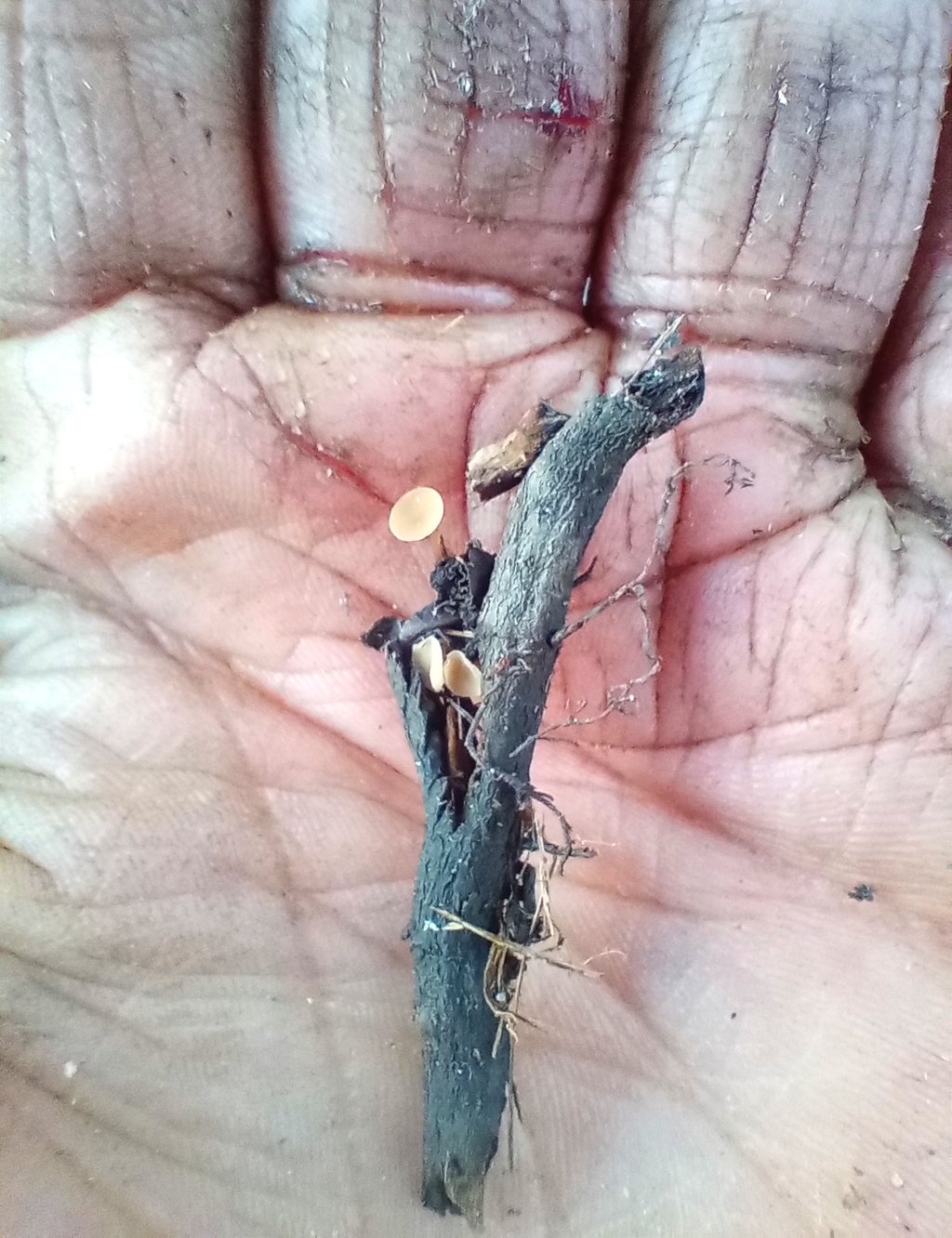
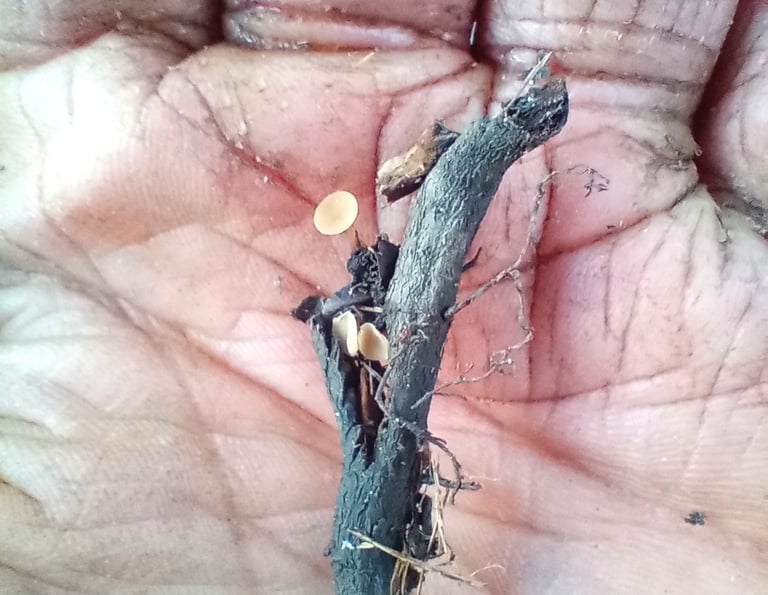
There is no “the farm ends and here and ‘nature’ starts there.” I know next to nothing about the saprophytic fungi on this maple twig, but I know we will only thrive with mutual care.
The key is that we repeat our practices - daily, weekly, monthly, annually - we repeat, and repeat, and repeat our acts of care. We return to the same field each Spring, offering nourishment the best way we know how. We don’t turn away when ‘something’ isn’t quite working - we pause the chaotic busy-ness of our brains, step back, examine why, say, the toads didn’t hatch, or how we can better work with that gift of walnuts. And with love, we fix it. We research and talk and listen and repeat. Caring like this is the world’s history - not the history you read in textbooks, but the everyday, toes-in-the-soil, multispecies history that takes place outside the spotlight. And isn’t it beautiful, to watch it become our legacy?
With Love,
Kia-Beth
zi/zir, she/her, they/them