What Dies and Dies; or, Transformation Is Circuitous
February 2026 newsletter
Kia-Beth Bennett
3/10/20268 min read
A note before the main piece: We have electricity!!! Link Electric finished rewiring the necessities of the house, and the lights, freezer, furnace and water are all running. We will be closing out the GoFundMe very soon; our beloved UU Church community is collecting money to cover the final bills. To get away from the chaos of three millennials living with him, Brian is on vacation in Rhode Island, visiting family and meeting area farmers. Jude and Murph are prioritizing settling into their new lives in an unfamiliar community. I am thriving as Spring arrives and I eat my way through a quart of homemade salsa every night.
Thank you, thank you again to everyone who has supported us during this transformative, nightmarish Winter. See you at the barbecue this Summer (more details to come).
(And thank you again for your patience when these monthly newsletters don’t arrive, well, monthly.)
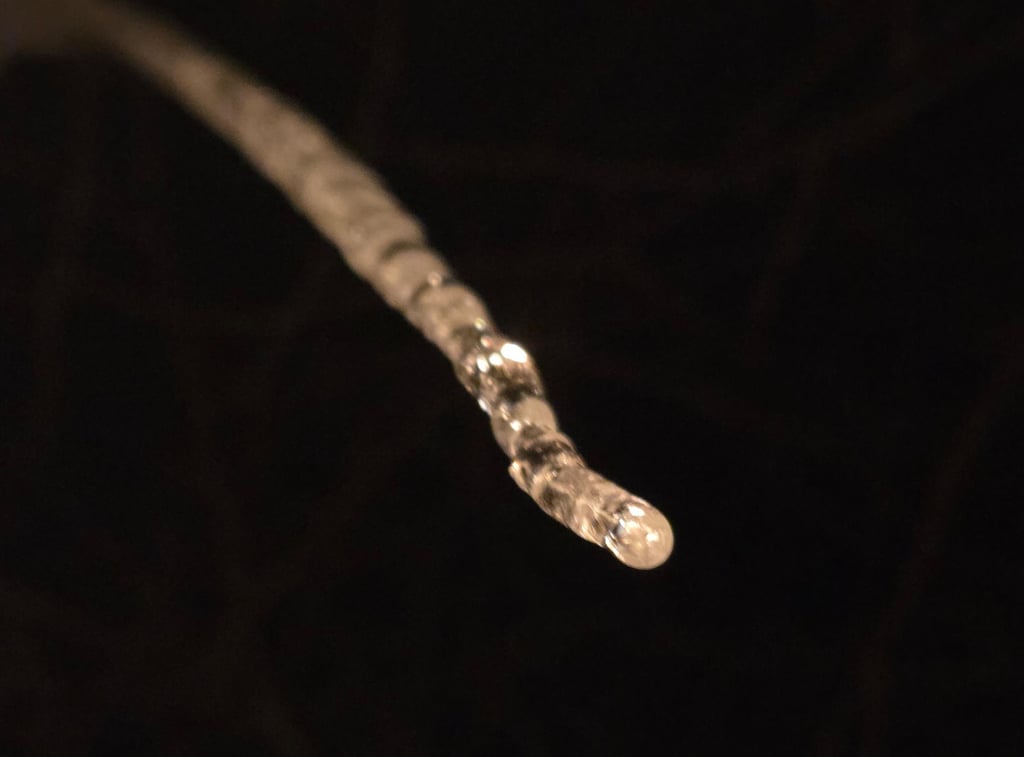
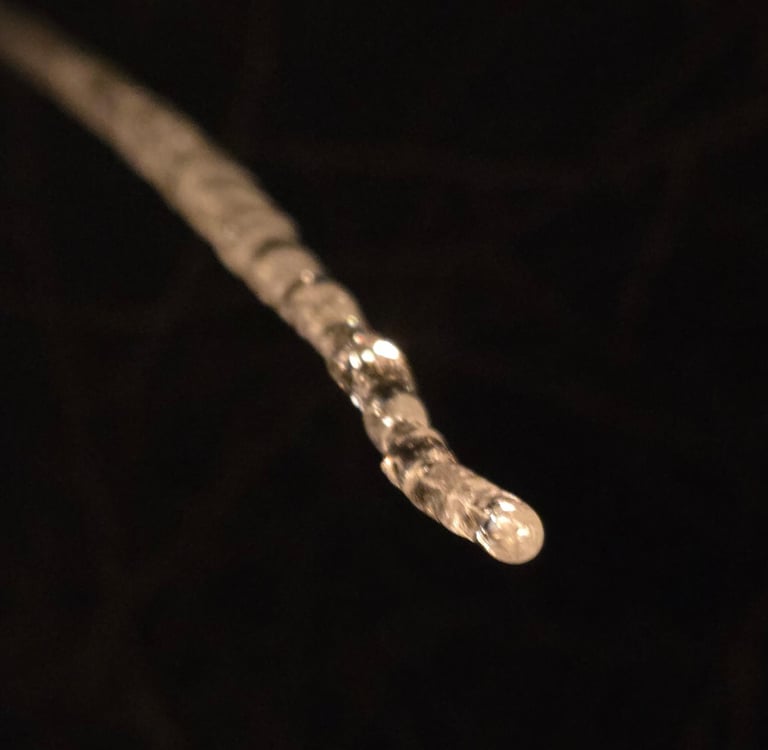
A long drip of icicle glows in the nightlights of the Solarium. Photo credit to Murph.
The self-care industry boasts a revenue of over $30 billion a year in the United States alone. I myself don’t follow trends or pay much attention to advertisements, but what I seem to notice is that a huge selling point within said industry is its “one-and-done” feature. Buy this ONE PERFECT cream, this ONE PERFECT supplement, go on this ONE PERFECT cruise, and everything will be alright. Your whole life, boiled down to one flaw that can be mended or vanquished for the low, low price of $48.99 (installments accepted). Such a message, I find, implies that all our wounds and metamorphoses are simplistic, linear challenges perfectly overcome by our loyalty to market-based solutions. Any evidence demonstrating this is not one’s experience seems to draw ire and confusion from the general public and suggestions that the next best step is to simply “suck it up and soldier on”. These suggestions intensify and increase in frequency when whatever is affecting the wounded impacts the previously unaltered, daily routine of the person telling them to get over it.
This was my train of thought when I received an unexpected bit of local gossip in early February. Apparently, unbeknownst to me…the farm - this farm - is…going down the drain? There seemed to be serious belief that the farm was scaling down…with the intention of ceasing to exist. People were watching us experience multiple years of tragedy and (I think) assuming the weight was too much, and that we’d eventually shutter our operations.
Well.
Okay, so for context, I’m going to include a brief retelling of the past half-decade. Forgive me if you’ve already read this bit of history.
I, having grown up farming and with a passion for restoration ecology, graduated from college in 2016 and launched my potato operation, Milkweed Tussock Tubers, seven months later. I purchased a house shortly thereafter and was working both with the spuds and my parents on their 17-year-old farm, Bittersweet Farm. Financially, Bittersweet was struggling. Sales at the local farmer’s market, which had held the farm afloat for almost fifteen years by then, were plummeting. We would spend months growing crops and transplants, twelve hours preparing for market day, six hours at market, and go home with $120 gross.
We began making hard decisions, decisions that altered the general culture of both farms. I sold seed potatoes online, and my parents started reducing their days at market. We sought other, community-based ways of supporting our endeavors, and I prioritized grant writing and infrastructure repairs. We were okay until 2021.
Between 2021 and 2026, five human family members and an uncounted number of non-human family members died. There were a lot of reasons for their deaths, and I’m not going into them, but it was devastating. It changed everything, and it made farming - holding up an entire operation of 113.5 acres with four types of livestock, six gardens, three greenhouses and two households - both the only thing that made sense anymore, and an enormous, uncarryable load. Brian and I, as the last Bennetts in New York, entirely stopped going to markets. We attended fewer social events. At that point, I was managing both MTT and Bittersweet, combining the operations and figuring out what was and was not doable. One key result was that we weren’t publicly representing the farm(s), and eventually people stopped asking about ‘what we had for sale’.
It wasn’t an announced decision, this pulling back. I mean, yes, I mentioned several times over the course of two years of newsletters that I’m emphasizing appropriate scale and shifting priorities. But there was no official schedule and no plan for our “return” to the standard market setup the farm was previously part of. Locals knew that Brian’s health was suffering and I was largely alone. From an outsider’s perspective, we just…faded.
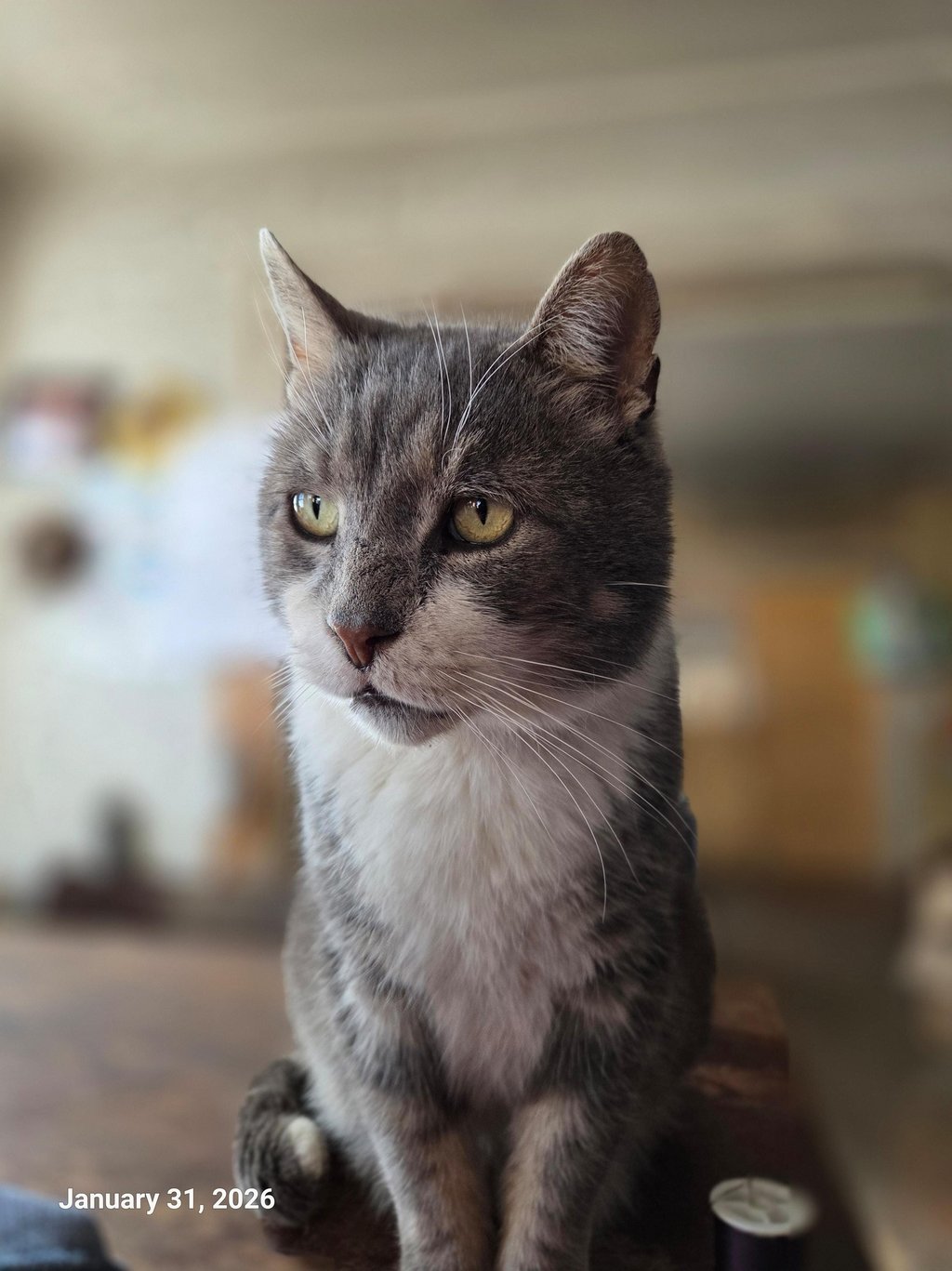
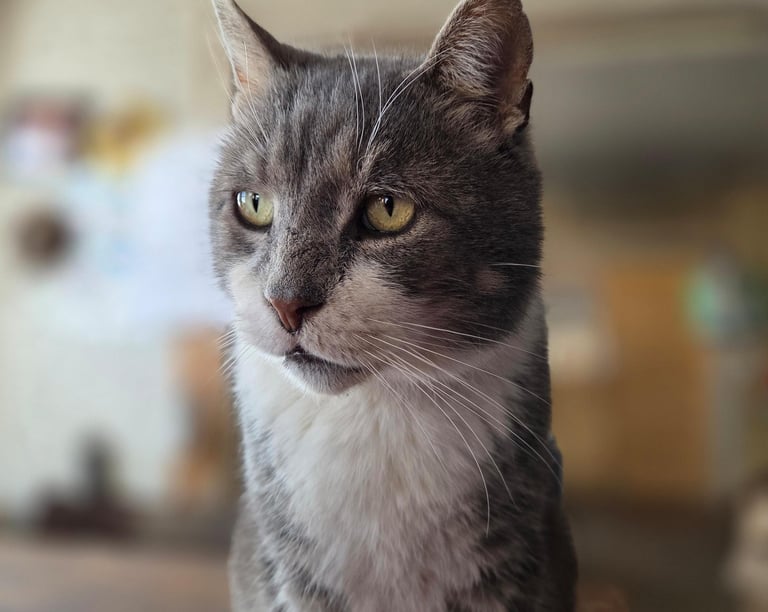
Sir Peter is attentive to all, particularly when he believes he has the chance to receive some snuggles. Photo credit to Murph.
I don’t think anyone gossiping about this meant poorly. I think people were concerned for us, and communication about our evolution was not as explicit as I’d thought. People take comfort in the perceived immutability of community pillars, like libraries, art galleries, farms, and small businesses. And that’s…just not how life works. That’s certainly not how biology, grief, resilience or self-care work. There’s no one-and-done, no perfect fix, no exact plan. There is nothing we could buy or sell that would have renewed our spirits and our status as a consistent market farm with educational opportunities. We were undergoing five years of trauma, depression, internal screaming and the dogged companionship of loss. We needed to shelter in place, if you will, to rest and ignore the incessant demands of the off-farm world. I need(ed) space to rearrange and understand who I am, having experienced not just the deaths of multiple loved ones, but also now the twelve-second stopping of my own heart, post-December 2025’s car crash. Such events change a person in ways not always visible to egg customers.
Here is where I need to emphasize very clearly:
The farm is not going down the drain.
I’ll say it louder for the people in the back:
The farm is not going down the drain.
I don’t state this defensively. The farm is transforming. The farm and the farm manager (me, in case that wasn’t clear to new readers) have, to quote my favorite one-woman skit series, “…been rearranged and revolutionized. Historically, those are never easy things, but they almost always lead to growth. All that’s left is to clean up the rubble and rebuild.”
We are still in that rubble-cleaning stage, which seems to be making people question whether or not we’re going to keep farming.
But in the midst of this Winter’s emergencies, while latching onto the advise fellow farmers were providing, I read this quote by the astounding Ursula K Le Guin:
“What goes on too long unchanged destroys itself. The forest is forever because it dies and dies and so lives.”
As an ecologist, I particularly love this. It’s metaphorically and literally true. When the rabbit is torn to shreds by the coyote pup, the carrion beetle larvae find food and a nest in bits of intestine. When fire rips through the undergrowth, charring every plant but the sequoias, seeds are stratified and finally able to germinate. When humans release ideals they’ve been fearfully clinging to, truer opportunities arise.
And this process takes time. There are cycles and setbacks and partial beginnings and forked roads and uncertainty and brilliant moments of understanding and grace. But none of that matches the expectations set by the cutthroat world of industry, capitalism and the underlying pressure to ‘bounce back.’ Society’s standards of personal well-being are tightly woven into our beliefs of what professional success looks like, and how that should be displayed to consumers. It’s an unspoken terms and conditions contract: “I agree to only let the deaths of my family members keep me from selling you kale for six months. I will do everything in my power to meet or exceed your commercially-oriented expectations. I know that my failure to do so will result in a loss of your loyalty and provided income stream, ending with my bankruptcy and potential homelessness.”
It’s that final sentence that lives in our chests - the fear that if we take a step back, breathe and reorient our lives and desires, we will be left behind and suffer (more so than we already do.) So we push ourselves. We ignore the pain in our shoulder and the ache in our hearts, hypervigilant that we must anticipate and meet “someone else’s” needs.
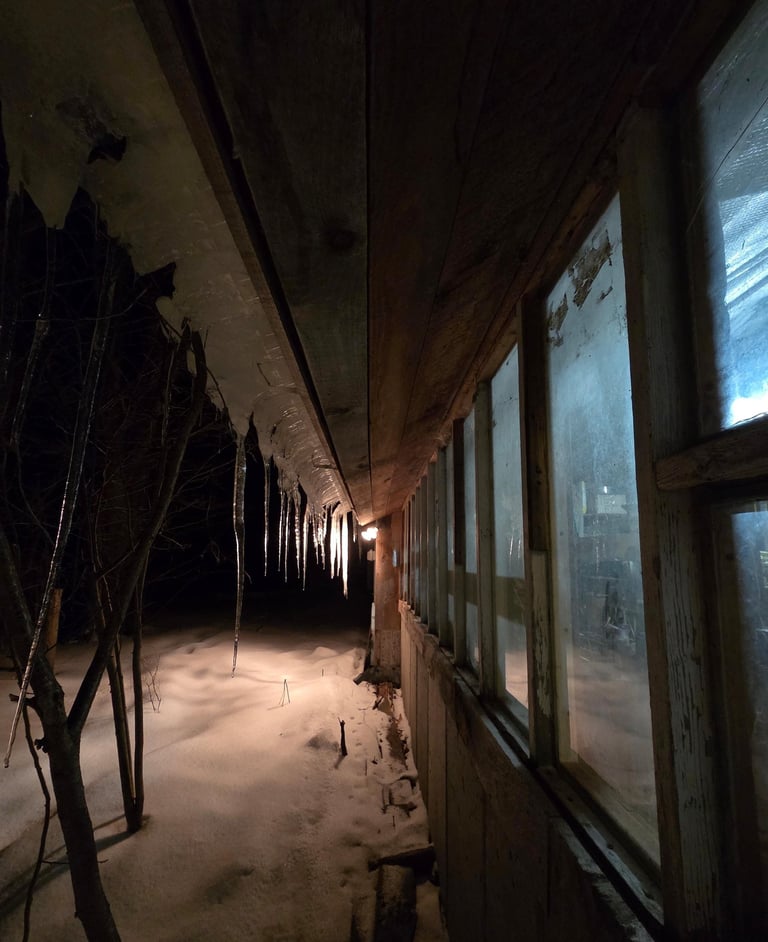
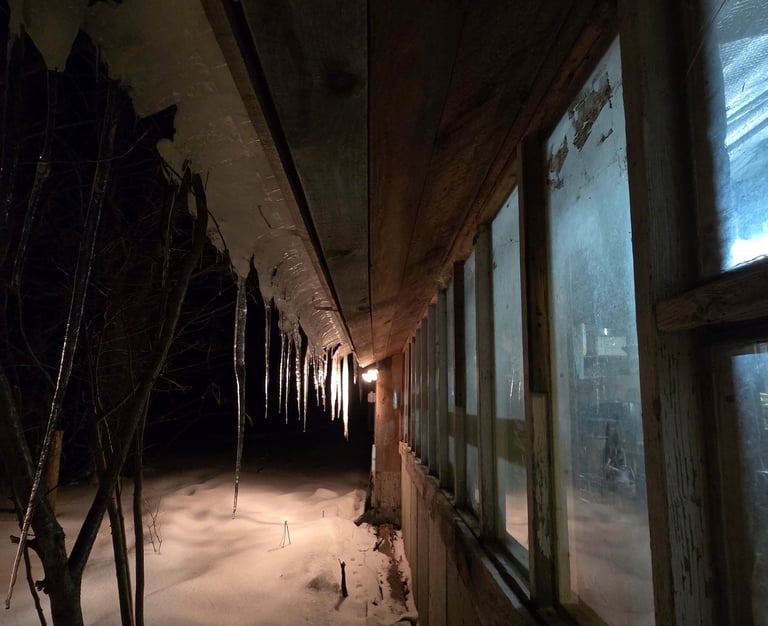
The juxtaposition of icicles, the straight-line construction of the Solarium wall, and the soft glow of the nightlights was quite striking this Winter. Photo credit to Murph.
I’m changing that.
In February, I started exploring questions I hoped would direct me towards greater honesty with myself and those around me.
What or whom is trying to die?
What parts of the farm can hibernate this year?
What does healing and/or recovery really look like?
How can I be at peace with making decisions that best serve myself and the whole of the farm, knowing many will not recognize the wisdom in those choices?
Who is sick or hurting?
What does memory and the honoring of the past look like here?
Which relationships nourish, and how can I nourish those whom with I share deep, loving connections?
How can I nourish myself?
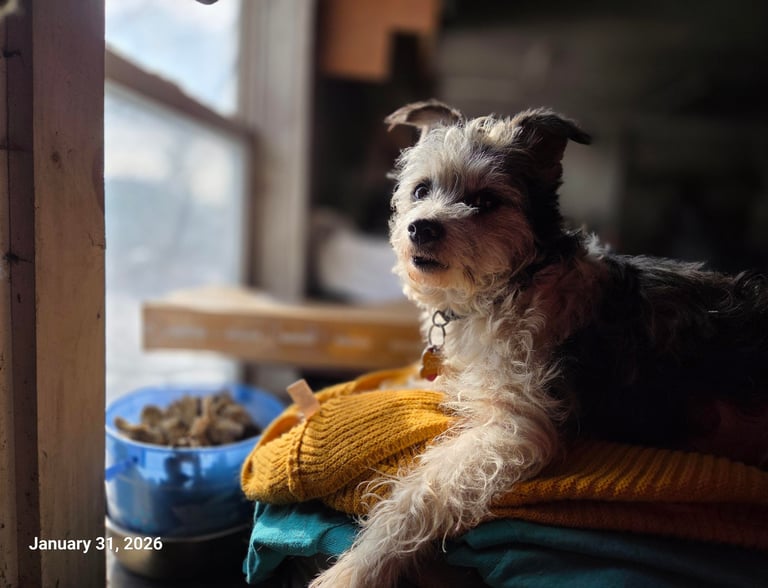
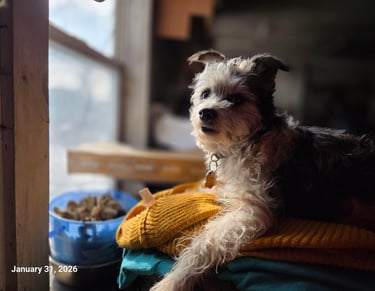
Cricket enjoys sunning himself on my clothes. Photo credit to Murph.
“What goes on too long unchanged destroys itself. The forest is forever because it dies and dies and so lives.” -Ursula K LeGuin
For the first time in my adult life, I get to make every decision with confidence and joy. Digging deep and letting go has opened space for me to spend more time doing work that I love, with people I love, with the farm at the core. This is what self-care looks like for me. Nothing is immediately ‘fixed,’ but I feel satisfied at the end of each day, and comfortable in the belief that such positivity has the chance to continue.
I’m probably making it sound easy, like I flipped a switch and was enlightened. And yeah, okay, maybe getting hit in the head by 106,000 pounds of milk truck did trigger a cheat code in my brain. But what is happening now is the accumulation of those years of hibernation and stress, and I am finally getting to shake off some of the load and compost the dust.
There will still be concern from others, and many, many dreams will be going into that compost pile. There will be death, which will make way for life. And life will make way for death. I’m still going to have months where I really don’t leave the farm, and days when hibernating takes precedence. If I may toss in a food-related analogy at the end, though, I’m not hibernating so much anymore, I’m fermenting. The farm is fermenting. We’re a big crock of bubbles and sugars and bitters and yeasts and carbon dioxide, and we don’t look like much on the surface. But someday, the lid will come off, and we will be able to share our rich, complex, hard-won flavours with the world.
Much Love,
Kia-Beth