What Lasts; or, On A Legacy of Garlic
April 2026 newsletter
Kia-Beth Bennett
5/13/20266 min read
I planted pussy willows two weeks ago. I think they’re a pretty underrated shrub; I’ve always loved them for their soft, grey, buds, and as an adult, their presence reminds me that my grandmother’s birthday is near. But I suspect they go relatively unnoticed, especially if you’re not hanging out with curious children or ecologists in the Northern stretches of North America. My latest fascination with them has been over their ability to feed early pollinators, and their potential as a dewormer. I’ve been working for more than half a decade now to reduce the parasite overload in my sheep and help them regain their strength, and given that I’m not one to jump to chemical dewormers, I’m investigating long-view, perennial methods that integrate easy treatments into daily flock activities. Another local farmer mentioned once that he cuts a load of willows each Spring as sheep fodder, and that this seems to wipe away any problems. Many young shoots and bitter greens do contain enough tannins to help knock back internal parasites, so I’m giving it a try. Unfortunately, despite being surrounded by wetlands, healthy pussy willows are scarce here, or simply inaccessible, so I had to bring the apothecary to the barn. Reaching out to friend and local native plant specialist McKay, I had hopes of receiving between two and ten potted plants. In hindsight, I see why his method was better, but it was still a bit of a shock when he said, “I’ve got 100 cuttings in a bucket for you.”
100 cuttings. Damn good thing the student volunteers were around the next day.
So almost 100 pussy willow cuttings are now in the ground (I saved a few back as sheep treats), with an estimated fifty that might survive. Planting willow cuttings really is just stabbing two-thirds of a small, green branch into wet soil and wishing them the best. (Providing a small sacrifice is likely supportive.) The students and I strategically placed the cuttings along fencelines, where ruminants will eventually be able to nibble the tips, or where I can easily prune them and toss the branches to the animals.
The operative word there, though, is ‘eventually’. I’m not naive - there won’t be a sudden explosion of new Salix discolor, and the ones that do root and grow will need at least three years before I feel comfortable letting sheep graze them. That’s three years that I’m still navigating a parasitic crisis using a vast blend of methods I'm not yet confident with.
But perennials are constant reminders of life lasting past the growing season, of someone's ability to see a future of promise. When selecting where to plant, a gardener must choose an environment that fits the needs of said plant, but also be aware that that plant will change the environment. Nettles excel at breaking down wood, making the nutrients more accessible to those around them. Dock sends a strong taproot down, aerating compacted, clay soil. And pussy willows will suck up floodwaters, turning a wet, open space into a snug collection of cold-hardy shrubbery.
By definition, then, not a single action I take on the farm is ever strictly for myself. Gardening can be an embodiment of care for those who come after you.
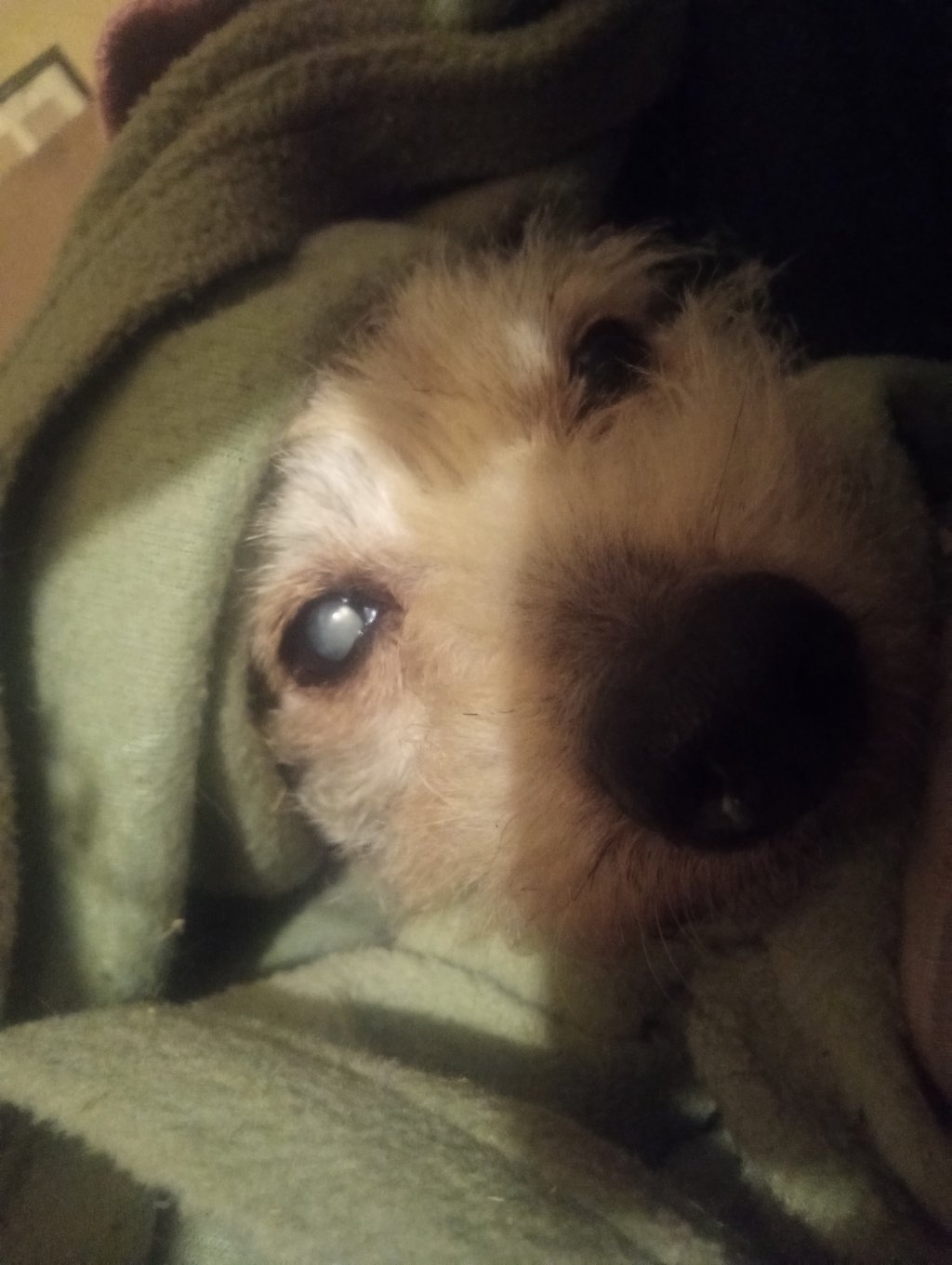
Sir Geoffrey Tobias Bennett, doing an adorable impersonation of a pig-in-a-blanket on a cold Spring night.
All this leads me back to a little comic I mentioned in the November 2024 newsletter. It hangs in the Solarium here, and in it, two characters are talking:
“Aren’t you terrified of what next year could be like? Everything is so messed up.”
“I think it will bring flowers.”
“Yes? Why?”
“Because I’m planting flowers.”
We live in a time when stability is a distant dream for many, when concerns over future impacts are ignored in favor of daily survival. But I also think that long-term planning has been educated out of us. Look at the hype, the terms, the philosophies-turned-influencer-handles: ‘YOLO’. ‘Live every day like it’s your last’. Songs and memes abound encouraging people to live in the moment, to not worry about consequences or next week’s plans - to not make plans at all.
I can’t live like that. No, I mean, I really, really can’t. Just the thought makes me feel like I’m shaking, like I need to scratch my way out of my skin. But I also, literally, can’t, because if every day is my last, there’s no reason stock up on firewood, right? No reason to put by pickles that I won’t eat. No reason to plant pussy willows for sheep I won’t see tomorrow.
No reason…unless it’s not about me. Unless it’s about that bigger picture, about my actions being, so often, in service to someone else. Unless, even if it is my last day, I want to leave those I love in better shape, and I want them to have a chance at thriving when I’m gone.
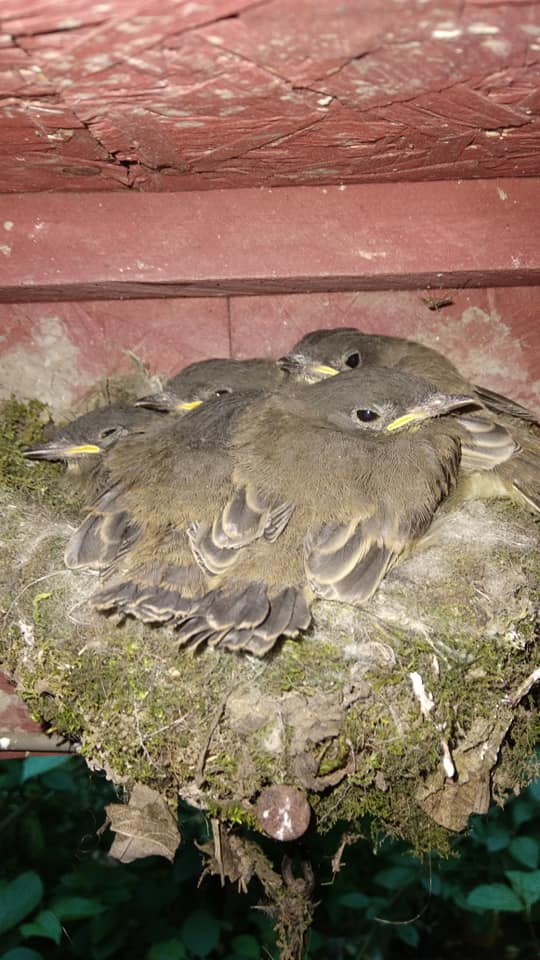
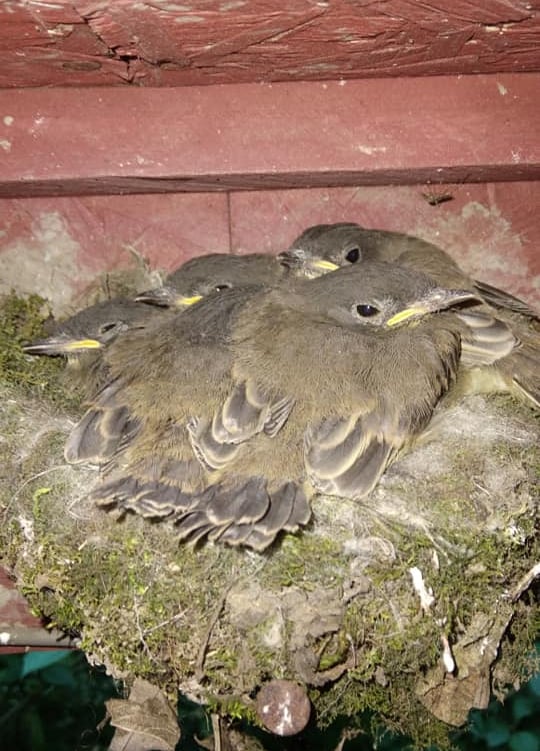
Baby birds abound in spring.
My mother, arguably, did not have the healthiest relationship with food. She lived in constant fear that we’d run out, and that legacy still makes it very difficult for me to finish off the last jar of salsa, or the final pork chop of the season. Nevertheless, such a legacy also meant that she left a shit-ton of food behind. She died in 2024, and I’m still going through the fruit she froze; I ate a smoothie a day for almost two weeks this winter, blowing through 14 quarts of strawberries. And she gardened. Twenty or so years ago, she planted garlic in what is now the farm’s small food forest, perhaps choosing the location for its accessibility, or its fertility. Three weeks ago, I once again began harvesting green garlic from that same patch, gathering for pizza the descendants of the cloves she once tucked into the ground.
“Aren’t you terrified of what this year could be like? Everything is so messed up.”
“I think it will bring garlic.”
“Yes? Why?”
“Because someone planted garlic here, twenty years ago.”
Maybe it’s a little more clunky on the tongue, but it’s true. I wander the farm and I see the ripples of actions taken ten, twenty, fifty and one hundred years ago. I see how maintaining - or ignoring - those changes have improved or worsened the ecosystems, the communities. In the shade of a 70-year-old silver maple sprout teeny, native geraniums. The blossoms of a crabapple planted 80 years ago are feeding the pollinators of today. The streams that farmers tended a century ago, having been neglected, are now filling in and need care. The forests felled the same century are growing back as aspen, oak and hickory, the undergrowth filled with secretive, tiny warblers and even smaller, early flowers. The gardens started when I was six nourish me still, at 32.
Seed farmers in particular seem to understand this - that their work’s legacy may not see light until after they’ve passed, or that it will only last if others learn to follow in their footsteps. They nurture plants for multiple seasons, embracing their full maturity, then harvest a life that no one will eat - a life stored in paper envelopes, mason jars, freezers, and clay pots, waiting for the future. There might not be an immediate dispersal option for those splotchy Skunk beans or fuzzy Brandywine tomato seeds; they may wait several generations for the right people to care and the right conditions to germinate.
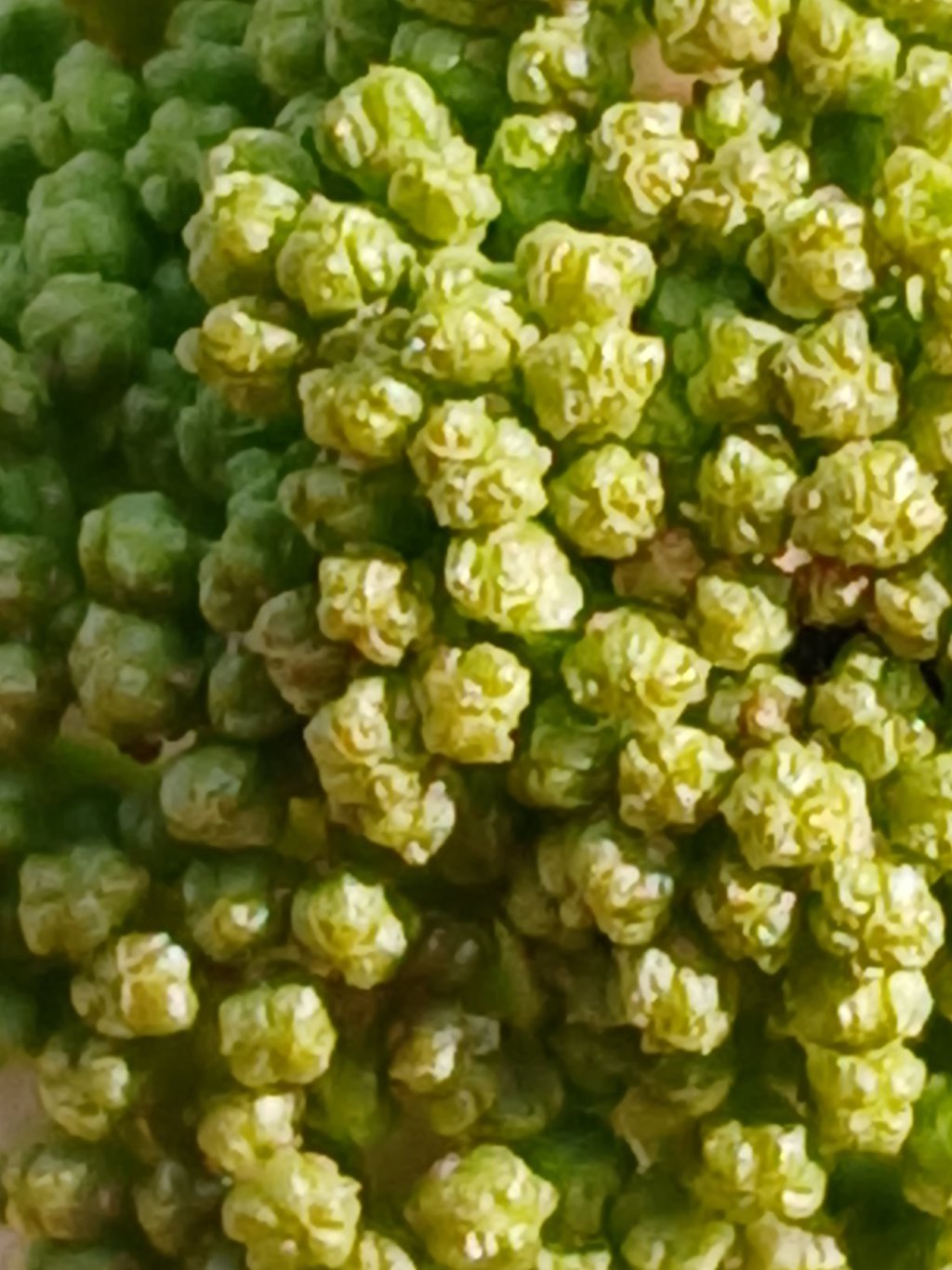
I am enjoying exploring the various settings on my camera - this is a particularly artistic close-up of a cluster of nannyberry buds.
Where am I going with all this? I suppose I’m rambling a little, in the way that my thoughts ramble through my brain, or I ramble along the cattle paths when checking for new calves. I think I’ve been moving through feelings of, “Why bother doing X?” and “Well, why not?” and “I mean, it sure seems to make someone happy, myself included. The meadowlarks are appreciative.” Bearing direct witness to the changes wrought by a decision made before I was born gives perspective. It’s not “some far away, political scandal that has no impact on my individual life”, it’s “my neighbors unknowingly altered my life, and I will unknowingly alter theirs, and we both unknowingly alter those around us, and maybe we should know a bit more about what that all means.” Maybe we should step back and be okay with thinking six months, six years, six decades ahead. Maybe I should picture a flock of healthy, happy sheep four years from now, because I was brave enough to plant pussy willows today.
Much Love,
Kia-Beth
If you enjoy these newsletters and want to support our work, consider subscribing on Substack! You can also become a paid subscriber, starting at $5 a month. Proceeds directly support the farm collaborative, our teaching and ecological efforts, and supply me with the occasional sweet treat.